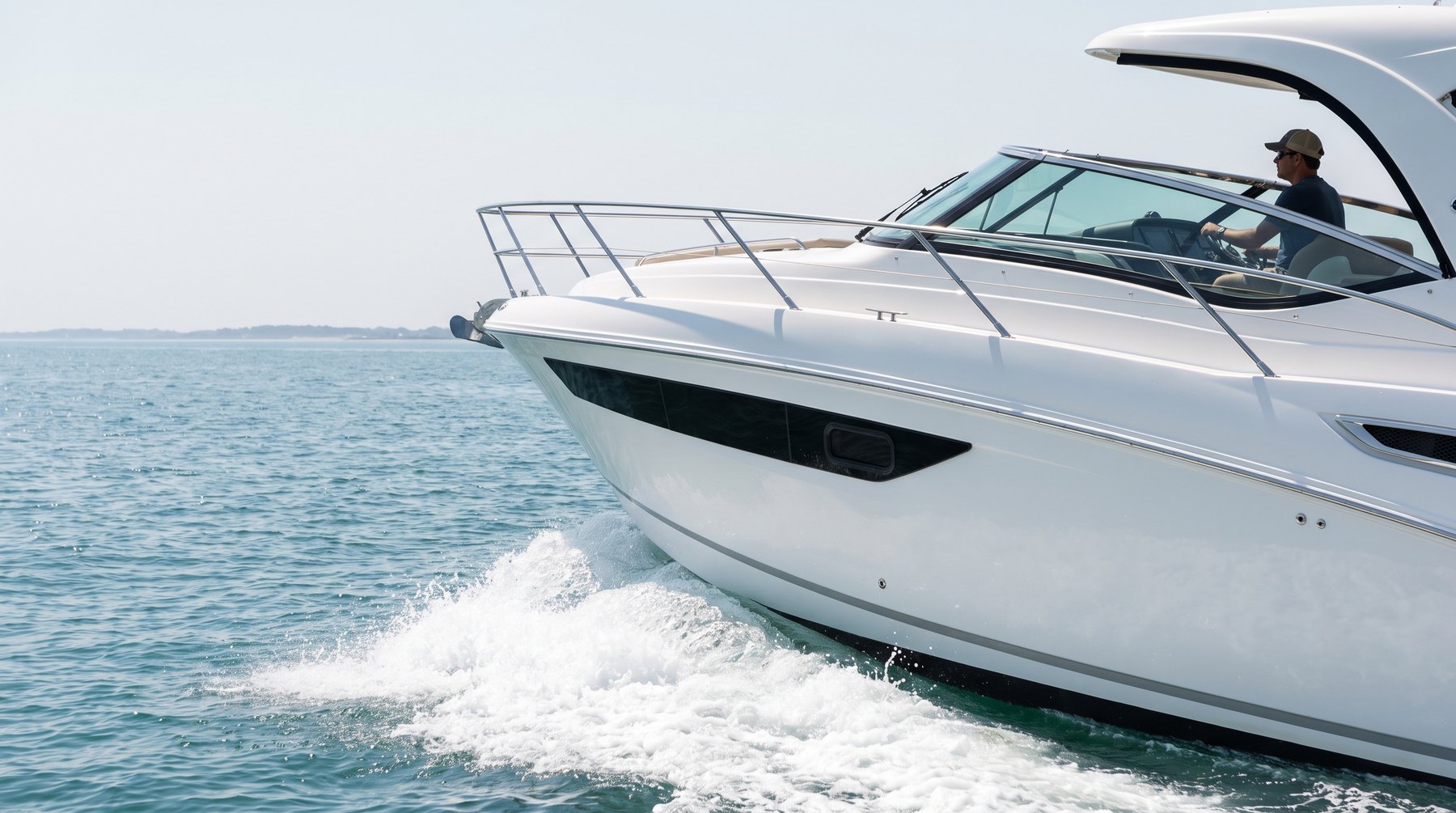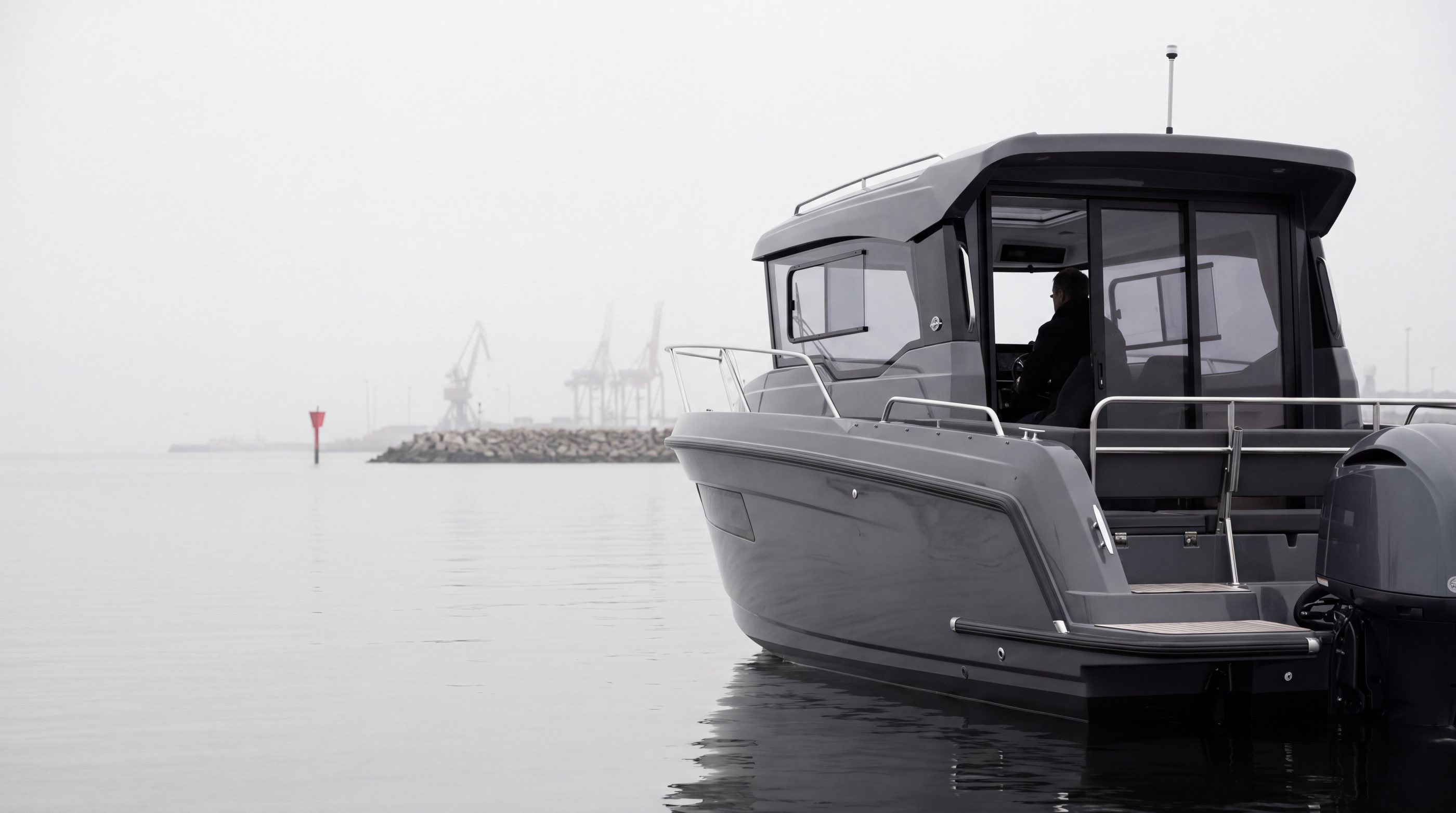
We listen
to the boat.
THE BOAT BECOMES CREW / BRAINSHIP MARINE TECHNOLOGY CO., LTD.
WHAT WE ARE AFTER
The sea can be larger than this.
Doubt narrows where you are willing to go. The forecast is not clear enough, so you stay at the dock. The engine has not sounded right, so you stay close to home. You are back before dark. You do not put into a harbor you do not know. Each of those quietly shrinks the sea.
When the boat can make itself heard, there are fewer reasons to stay in. Fewer reasons to stay in mean more places to go. What we are ultimately after is not safety in itself, but the freedom on the far side of it.
Peace of mind and freedom,
for every captain.
WHY KEEP WATCHING
Safety is not something experience can buy.
Collisions are about 10% — few in number, but when one happens, lives are on the line. Nothing makes that weigh less. And the statistics point to something else as well: the most common accident on a pleasure boat is a boat that will not run. Of the 866 pleasure boats involved in accidents in Japan in 2024, roughly 60% could not continue under way.
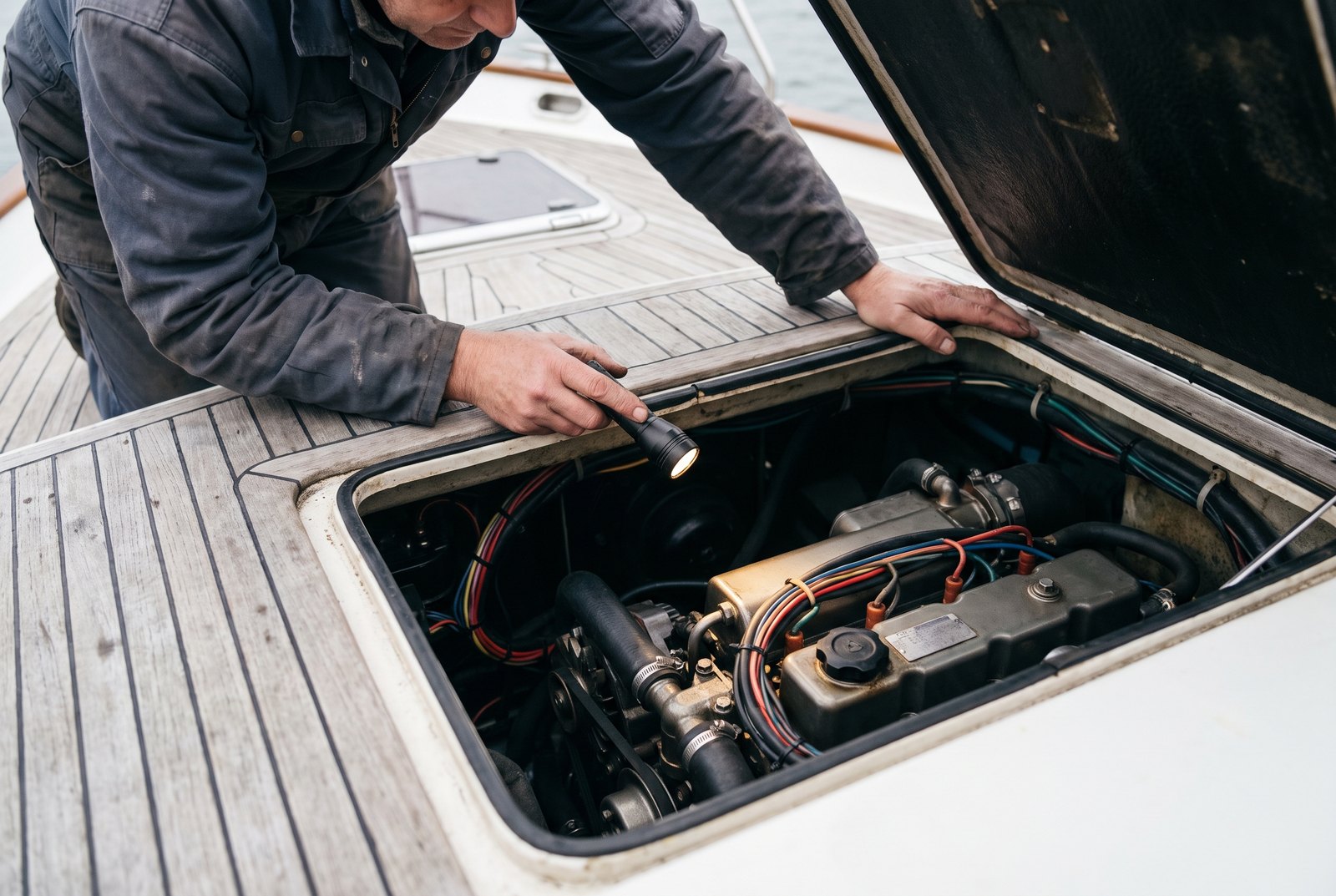
When the Japan Coast Guard examined boats that had suffered engine failure, 43% of the failures were in parts outside the scheduled-replacement list — parts that fail even when the service schedule has been followed to the letter. And 74% of those boats had no record of engine maintenance from the time of purchase.
None of this is a question of skill. There are no hands good enough to feel a bearing going. Thirty years at the helm will make you a better boat handler; it will not make a failing bearing visible. That takes sensors, and a record that goes back far enough to compare.
Source: Japan Coast Guard, Kainan no genkyō to taisaku [Marine Accidents: Current Status and Countermeasures], 2024 edition, published April 2025 (in Japanese). The figure of roughly 60% is our own sum of the report's four "unable to navigate" categories (engine failure 185, other 161, propeller or rudder damage 100, adrift unmanned 64; 510 boats in all), against 866 in total; collisions were 88 boats, or 10%. The engine-failure study covered 164 vessels involved in accidents and the boatyards that repaired them, and the breakdown of failed parts is expressed against the 137 valid responses. Of the 59 boats whose failure lay outside the scheduled-replacement list, 47% were electrical and 25% involved the shaft. On maintenance records, 89% of the 109 repair responses said such a record would have been useful. The agency's own recommendations include watching for the precursors of failure — unusual noise and vibration — and keeping a maintenance record.
OUR HYPOTHESIS
The problem is not that people are not paying attention.
The way to reduce what gets missed is not to ask people to try harder. It is to put something alongside them that never looks away. The captain concentrates on the decision; the machine keeps the watch.
Adding instruments does not solve it either. One more display is one more thing to look at. Being able to check the boat from your phone only adds one more thing to check. Pour information into a place where attention is already short and it gets worse, not better.
What is needed is not more, but less. So what we are building is crew. Something that watches the water around you and the machinery beneath you, and speaks up first — before you have thought to ask. The helm stays yours.
What matters to us
Build at sea, not at a desk.
Simulation on a screen will not tell you what the sea is like. Swell, salt, vibration, and the traffic moving through it. Tokyo Bay holds the Keihin port complex; everything from container ships to small craft moves through it and the AIS traffic is dense — hard conditions for anything meant to keep watch, which is why we are based there. We do not say a thing can be done until we have seen it done.
Build reassurance, not features.
We do not believe that more things a product can do makes it a better product. What we count is not the number of features, but the number of things the captain no longer has to hold in mind.
Your words reach us through Helva.
Not through a survey. What is said aboard reaches Helva — the crewmate we are building — and Helva carries it into the next version. Improvement starts where the boat is, not where we are. What is recorded, and what it is used for, we will always state plainly.
Where we are, and where this goes.
-
2026NOW
Incorporation, and a test boat in the water
The company was founded in July. We expect to commission the test boat this fall, and sea trials in Tokyo Bay begin as soon as she is in the water.
-
2027
Closed beta
A small number of owners with Helva AI aboard their own boats, in their own waters. This is where we widen the range of boats and cruising grounds, and settle the final shape of the product.
-
BEYOND
Japan first, then overseas
Full release in Japan, with field evaluation beginning in parallel with owners on the US East Coast, where there is a deep and long-standing cruising culture.
Plans will change with what the trials tell us. Our registry details are on the company page.