



HELVA AI
Go out with
Helva aboard.
WHAT HELVA TAKES ON
Aboard alone,
never on your own.
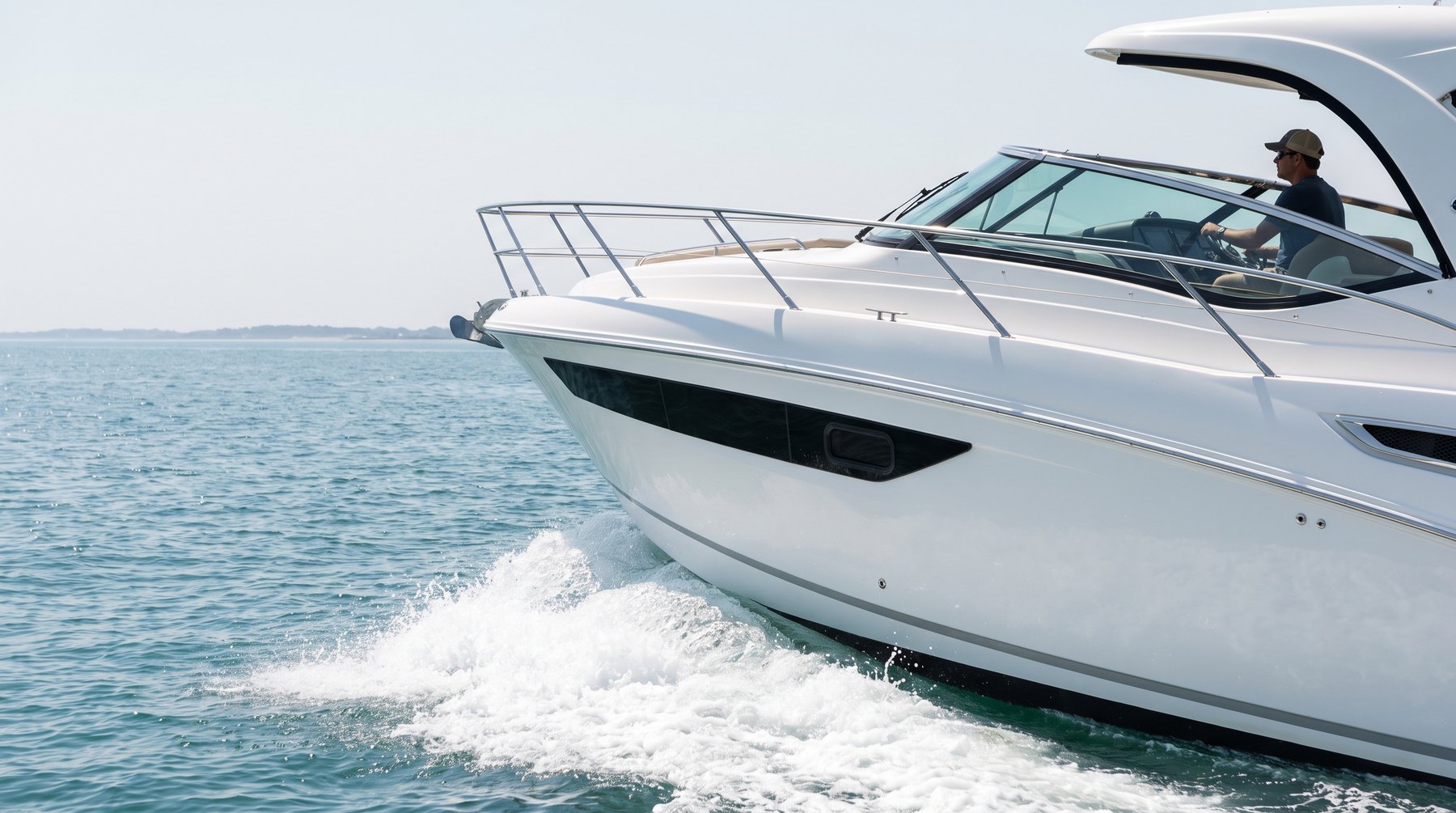
Helva AI is AI crew — crew that keeps watching without letting attention lapse, and speaks first. And the watch does not end when your day on the water does. When you step off the boat, Helva stays aboard and keeps watching.
Watching the water around you, and listening to what changes inside the boat: these are not two machines but one thing, done without a break. So Helva takes on both.
The watch on the water is already aboard and running in Tokyo Bay. The listening inside the boat goes aboard in the 2027 closed beta.
WITH YOU
On the water,
right beside you.
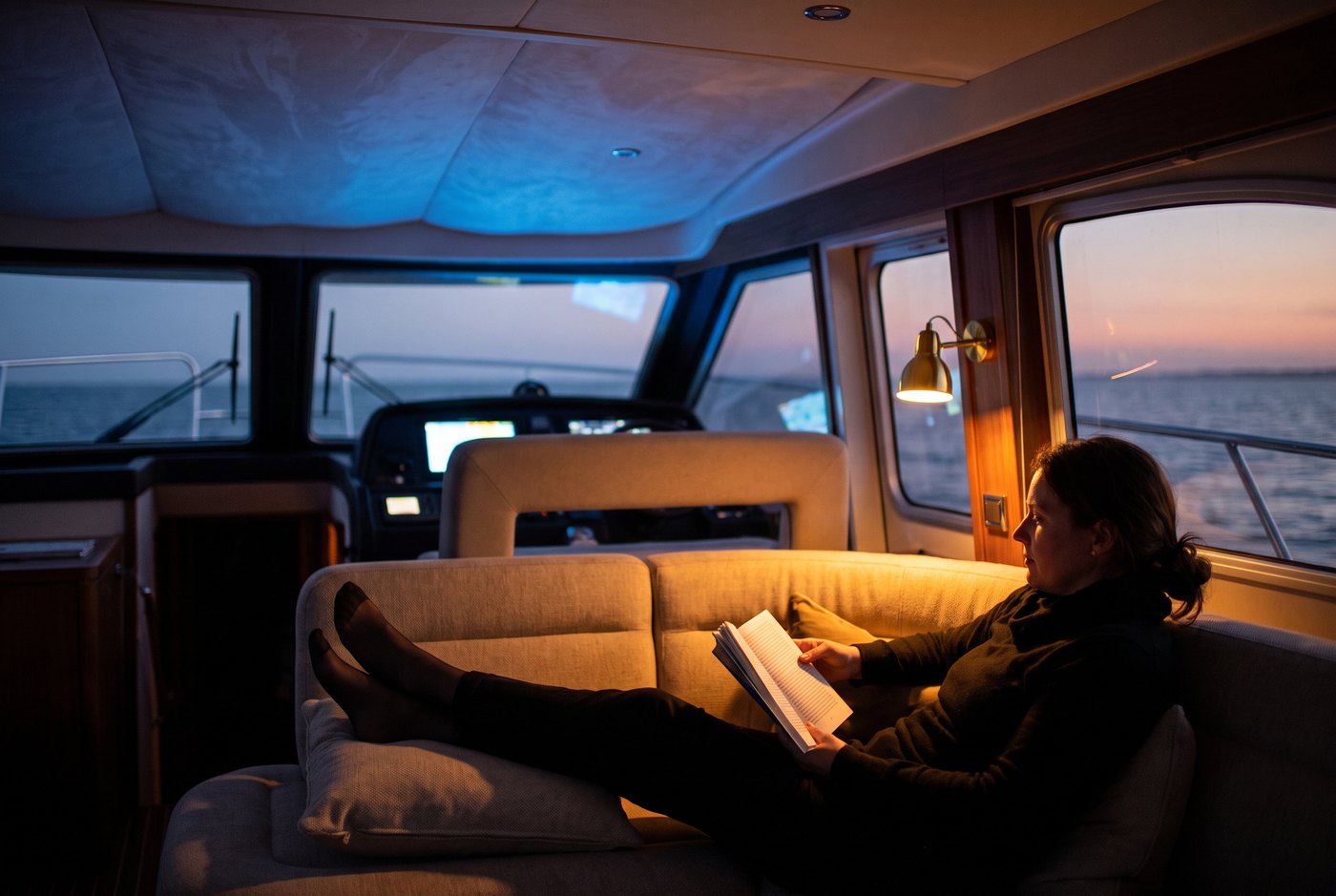
Watch ahead, watch astern, read the wind and the tide. If you have people aboard, watch them too. And all the while the engine keeps running. Nobody can hold all of it at once. What Helva takes on is all of the watching — the traffic around you, the wind and the tide, and, from the 2027 beta, how the engine is doing. What stays in your hands is the deciding.
360° camera, AIS, GPS, weather, tide. A vessel closing, a sky on the turn, the tide running. Helva watches without a break, works out what is about to happen, and speaks first — before you have to ask. Nothing arrives as a raw list of detections. The same piece of news is delivered differently while you are docking than when you are running.
So you are no longer pinned to the instruments, and can keep your eyes on the water. The wheel is yours, and so is where you go. Every reason not to go that falls away is one more place you can go.
HELVA SPEAKING FIRST / TOKYO BAY, ON THE MACHINE
A record of what the machine (NVIDIA Jetson AGX Orin) actually put out. It answers no question — Helva opened it. Two more lines that Helva opened appear in the right-hand screen under “What goes aboard”. Wording will change as development continues.
HOW IT REACHES YOU
Interrupt what is urgent.
Let the rest wait.
How something reaches you depends on how urgent it is and where you happen to be. For now: the voice, the screen at the helm, and your phone. An iPad, a smartwatch, and indicator lights come later.
Anything that changes meaning in seconds — a vessel closing — interrupts immediately. A trend worth reporting, or a piece of maintenance worth doing, waits until it will not cost you anything. Staying quiet when quiet is the right answer is part of the same design.
What is said, and when, Helva decides. Whether you are in the slip, under way, or coming in. Where you are and what water you are in. What the weather is doing. All of that goes into the call before anything is said.
EVEN WHEN YOU’RE AWAY
You step ashore.
Helva stays aboard.
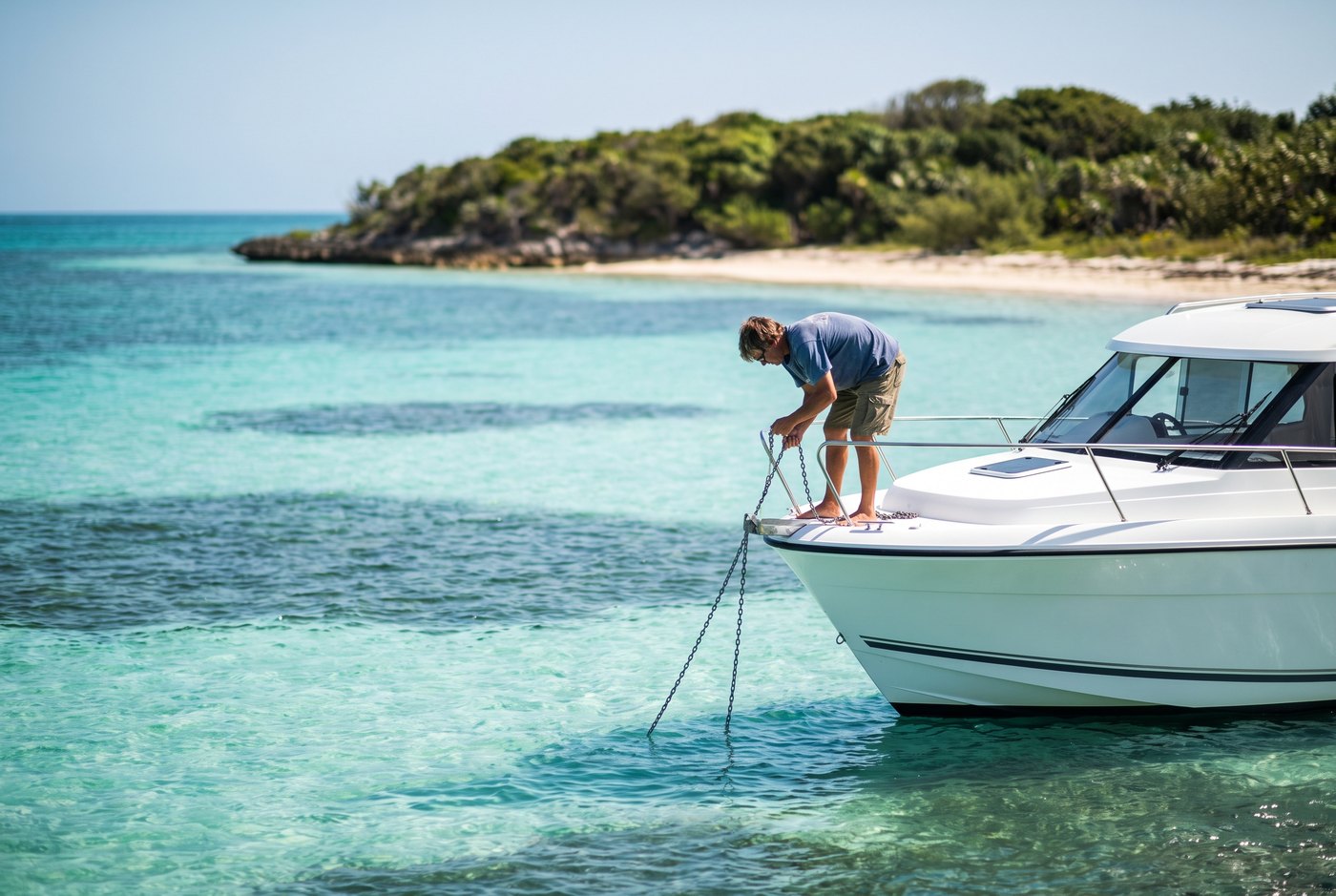
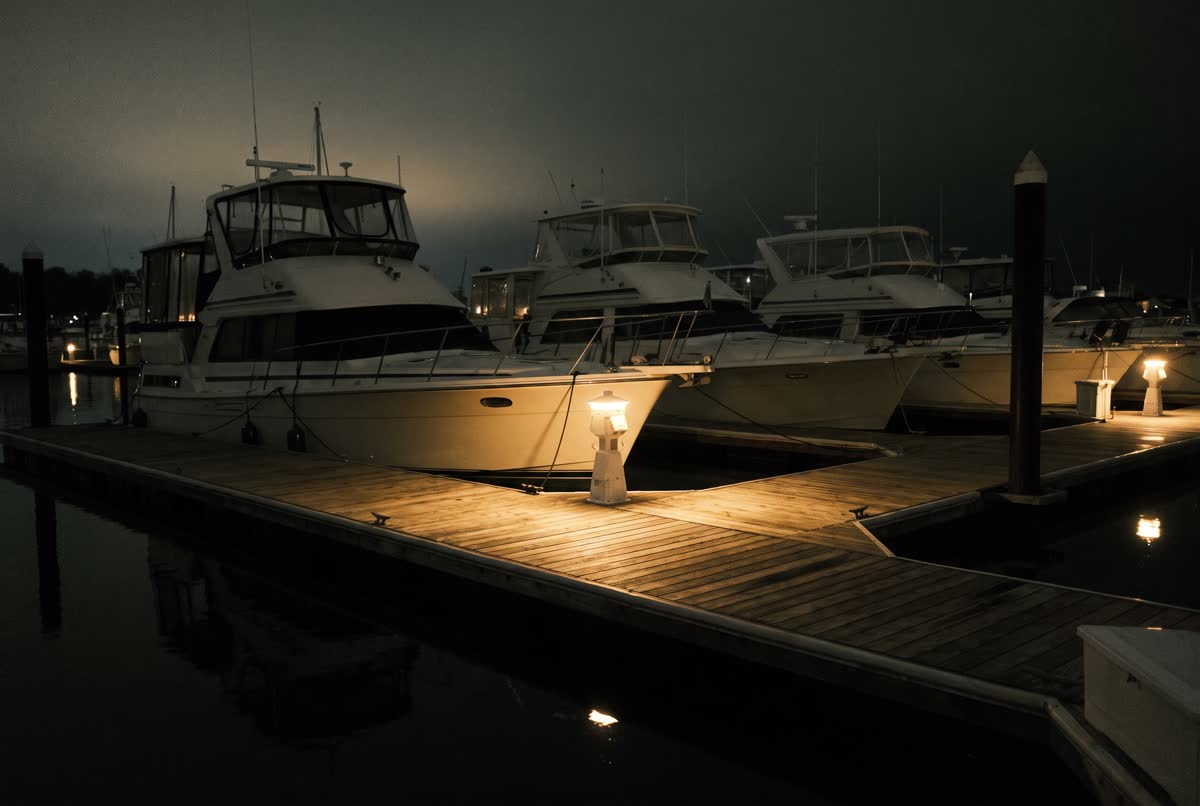
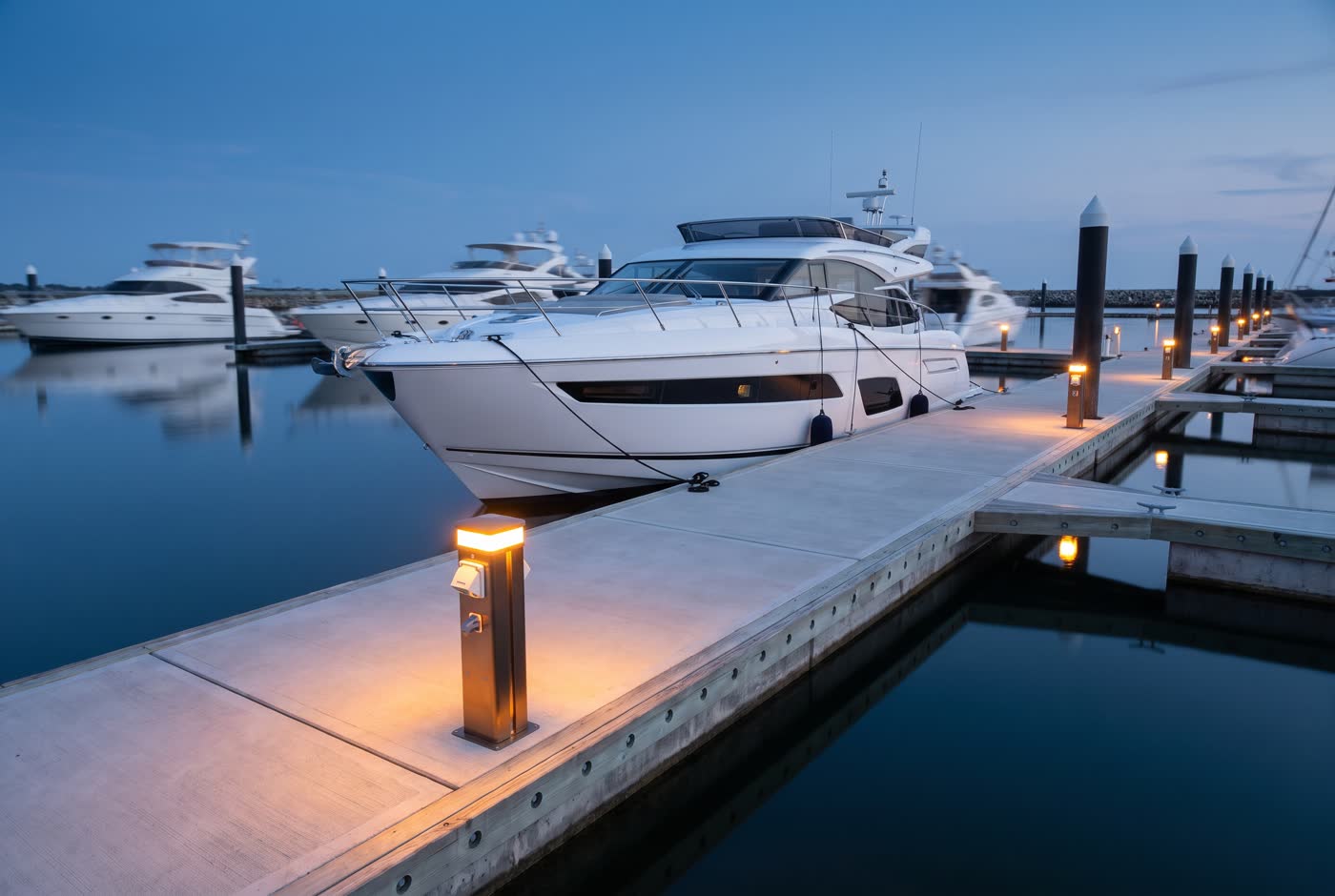
All week, while you are on land, the boat sits in her slip. How the bilge pump cycles, battery voltage, temperature and humidity below. Helva keeps watching all of it — and remembers what the engine sounded and felt like on your last run, and how the fuel went down.
What happens inside a boat rarely fails all at once; it drifts a little each day. You adjust to a drift that slow — the people aboard most often are the least likely to catch it. Helva remembers how things were, and tells you only what has changed. Anything urgent goes straight to your phone. The rest waits, gathered up for before your next trip.
Get to the marina on Saturday and head straight out. One less “is she all right today?” before you cast off.
This is what we will build and prove during the 2027 closed beta.
The most common accident on a pleasure boat is, in fact, not being able to keep going. The numbers, and where they come from, are on the company page.
WHY HELVA LIVES ABOARD
Helva is aboard.
The cameras are the eyes, the sensors the sense of the body. The boat itself is where Helva lives. Whether you are aboard or not, the same crew is on the same boat — which is why the watch on the water and the changes inside the boat are never split apart.
The watch and the alerting are worked out on board. And Helva remembers how this boat used to be — the sound of her last summer, how often the bilge ran up to last month. That record does not leave the boat.
The captain runs the boat, as always. Helva does not take the decision away; what grows is what you have to decide with. The mind belongs to the ship. The decisions belong to her captain.
WHAT GOES ABOARD
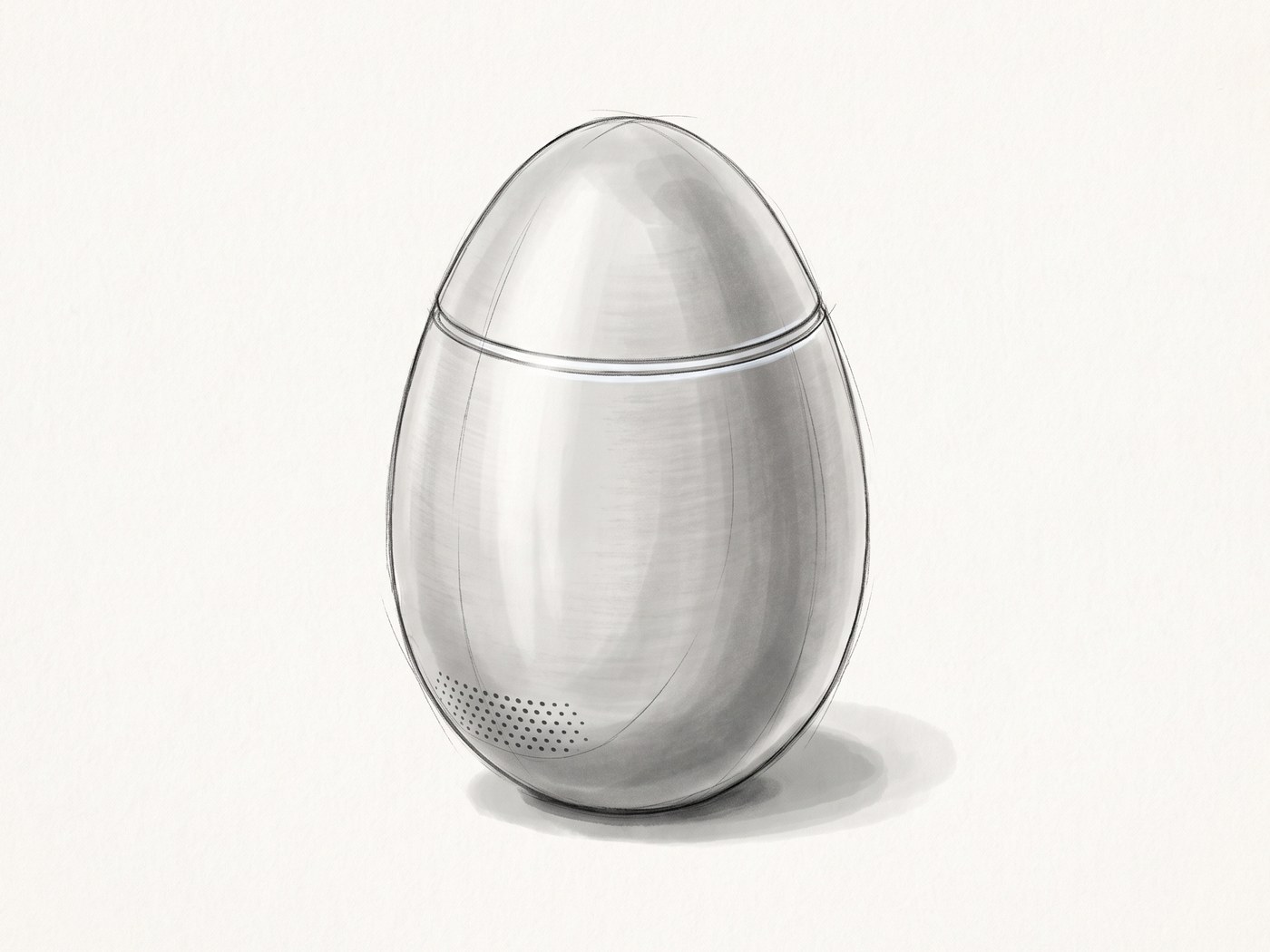
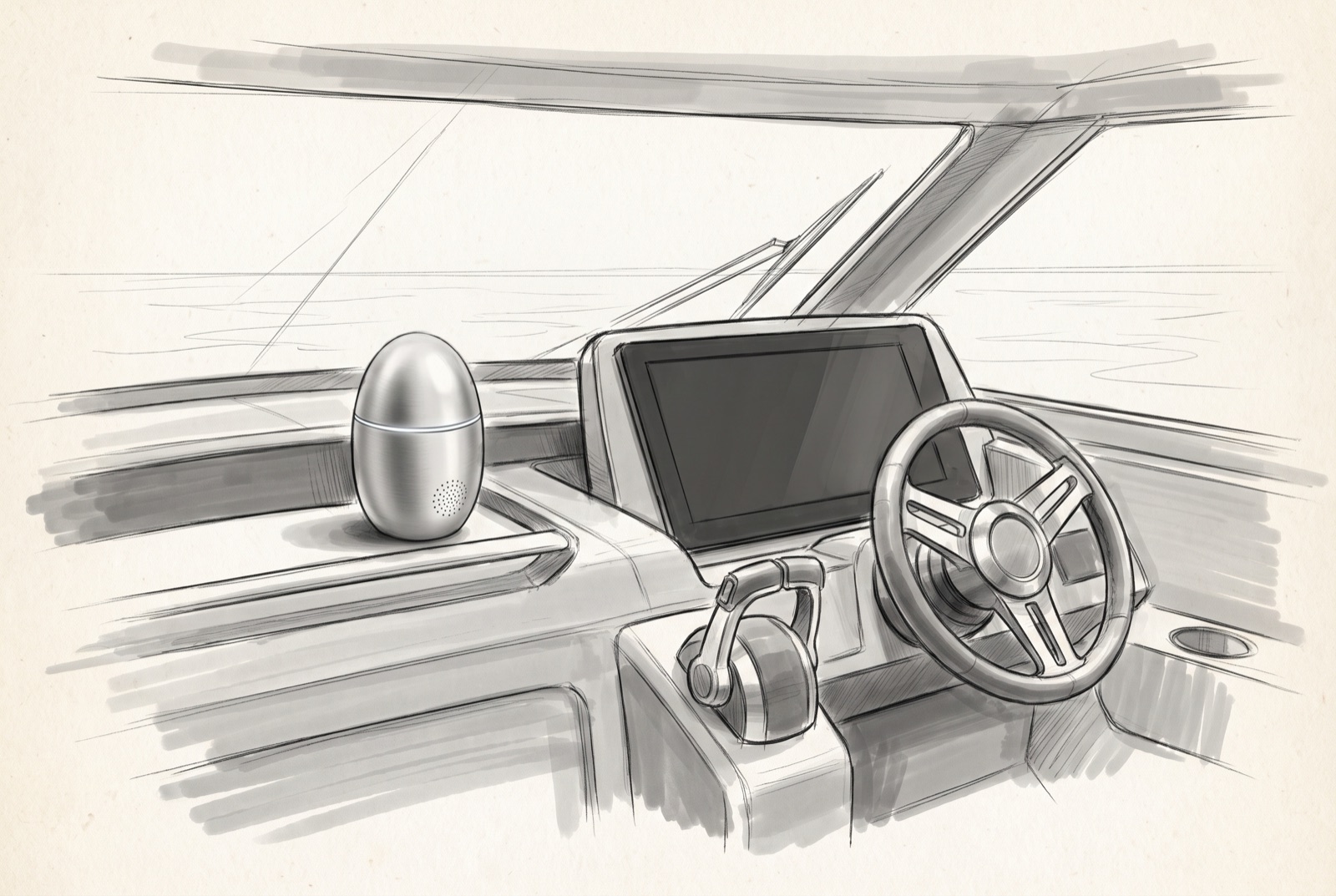
Two screens, and one object.
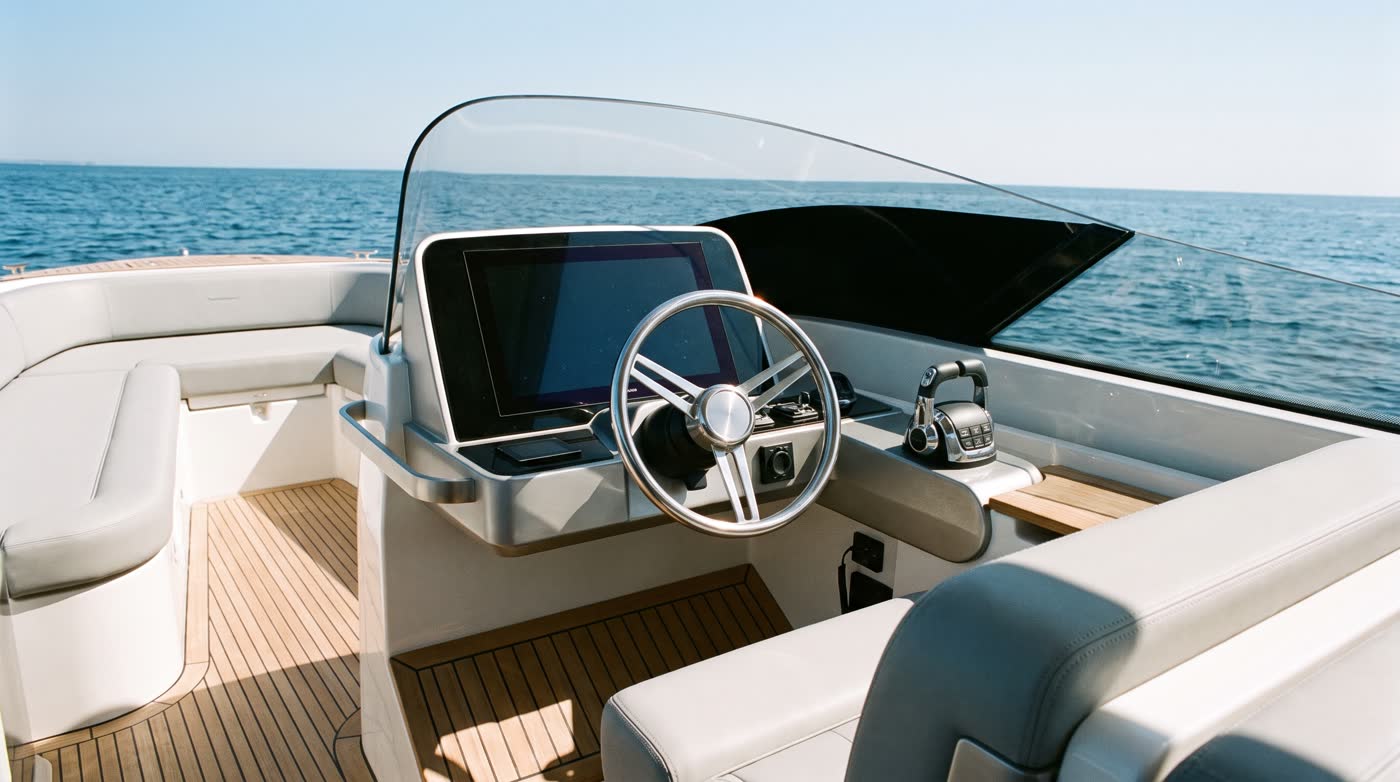
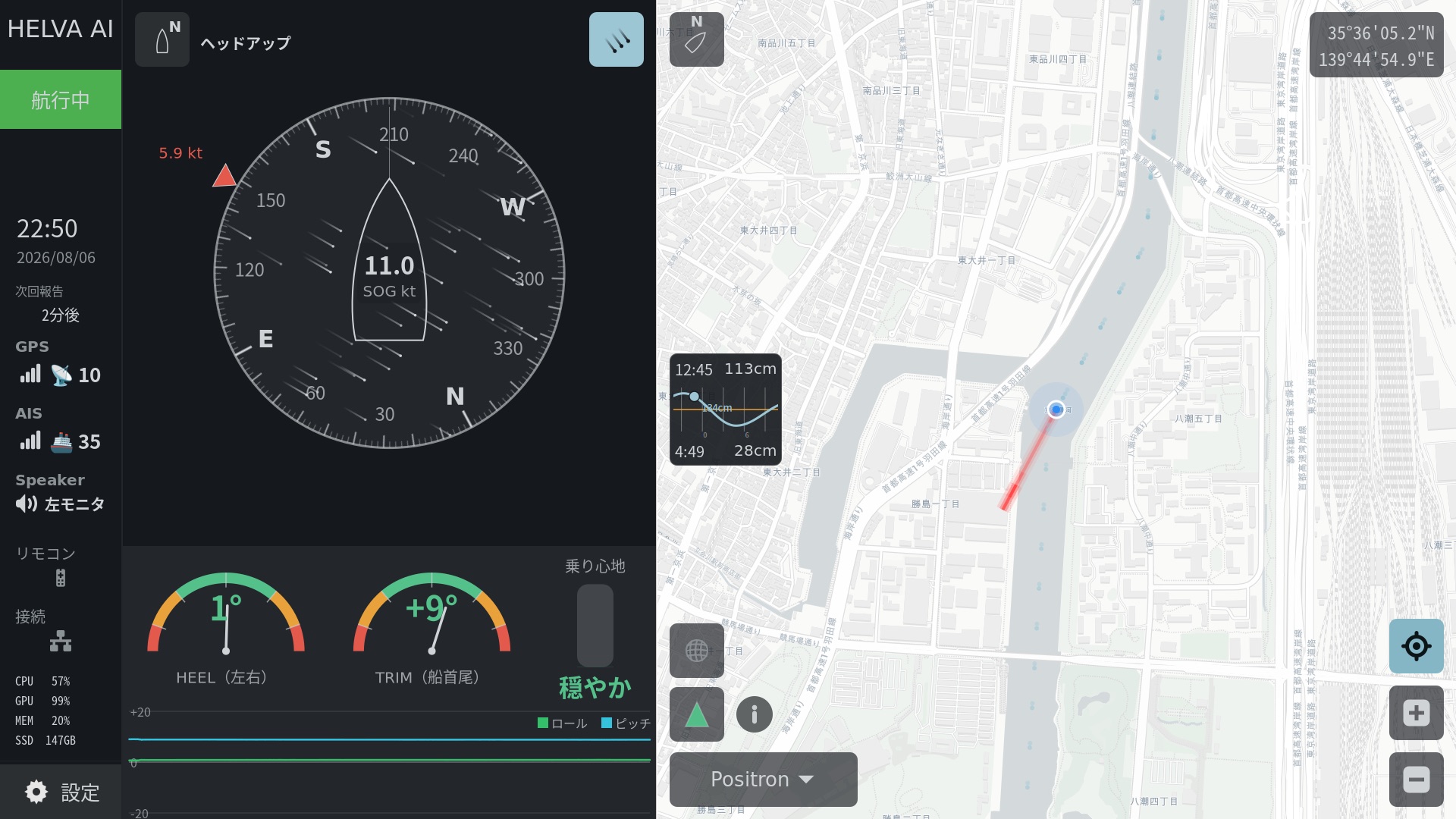
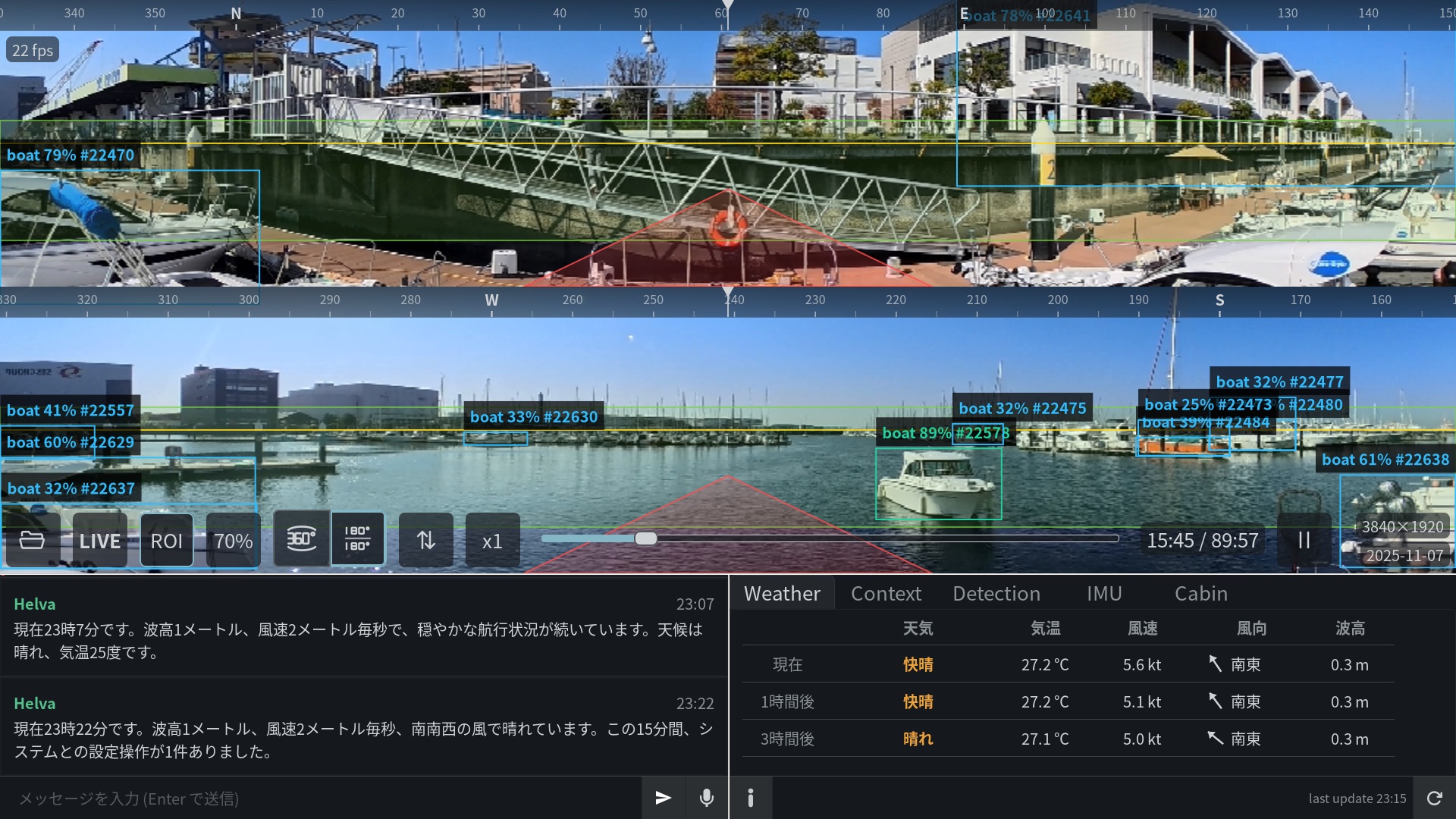
Two monitors sit at the helm. Navigation on the left, cameras and conversation on the right.
TECHNICAL
What is dangerous gets said, connection or not.
Out on the water, connectivity comes and goes. The watch and the collision reasoning are completed on board, so a warning still reaches you with no link at all. Choosing the words, and reaching for the wider picture, borrow help from ashore when there is a connection. Which parts can afford to lose the link, and which cannot, is decided in advance.
| Sensing | 360° camera / AIS (SDR reception) / GPS / attitude sensor (IMU) / weather and sea state |
|---|---|
| Compute | NVIDIA Jetson, aboard. External compute is used alongside it when connected |
| Condition monitoring | Continuous recording and change detection across sound, vibration, fuel consumption, bilge activity, temperature and humidity, and voltage (to be built during the 2027 beta) |
| Interface | The screen at the helm, the voice, and your phone. iPad and smartwatch to follow |
| Connectivity | Signal K is implemented as the intake for the boat's own data. The design receives NMEA 2000 and the other standards already aboard without adding another proprietary protocol, and it must not force you to rip out or replace the electronics you already have |
| Closing vessels | For vessels received over AIS, the closest point of approach and the time to it are computed every second. Head-on, crossing and overtaking are told apart, and which vessel must give way under the COLREGs is worked out. Helva does not tell you how to steer. Finding a collision course in the camera image is being trialed at sea now. |
| Fitting | Boats with a hardtop or a windscreen, where a screen can go at the helm. Installed alongside your existing electronics |
Specifications are under development and subject to change.
WHO BUILDS IT
We put it on a boat, in Tokyo Bay.
Helva AI is built by Brainship Marine Technology Co., Ltd. (Minato-ku, Tokyo; Japan Corporate Number 1010401201104). Our trials run out of Yumenoshima Marina in Tokyo Bay — heavy traffic, dense AIS, and about as demanding a place as there is to test something that has to keep watching.
We write down only what we have confirmed on an actual boat. We will report what comes next the same way.
CLOSED BETA 2027 / A SMALL NUMBER OF BOATS
News of the build, and word
when we open applications.
Ticking the box is an expression of interest, not an order. Price and specification are still under development and may change. The 2027 beta runs in Japan; warranty, support and terms of supply will be published when applications open. Please see how we handle personal information.